User Research and Design Systems at Scale
As the Senior User Researcher at LogicGate, I established the company's first comprehensive research operations during a critical growth phase. My role focused on building scalable UX / UI infrastructure and guiding product strategy through enterprise insights.
Research Infrastructure & Systems
Overview: When I joined LogicGate, research happened sporadically: product decisions were based on anecdotal feedback from sales calls, scattered support tickets, and informal conversations with a handful of clients.
As we scaled toward Series C funding and expanded our Fortune 500 customer base, this ad-hoc approach became a critical bottleneck.
I needed to build research infrastructure that could grow with the company, establish repeatable processes that delivered consistent insights, and create systems that would enable every team member to access and leverage user research in their daily work.
Building Scalable User Research Processes
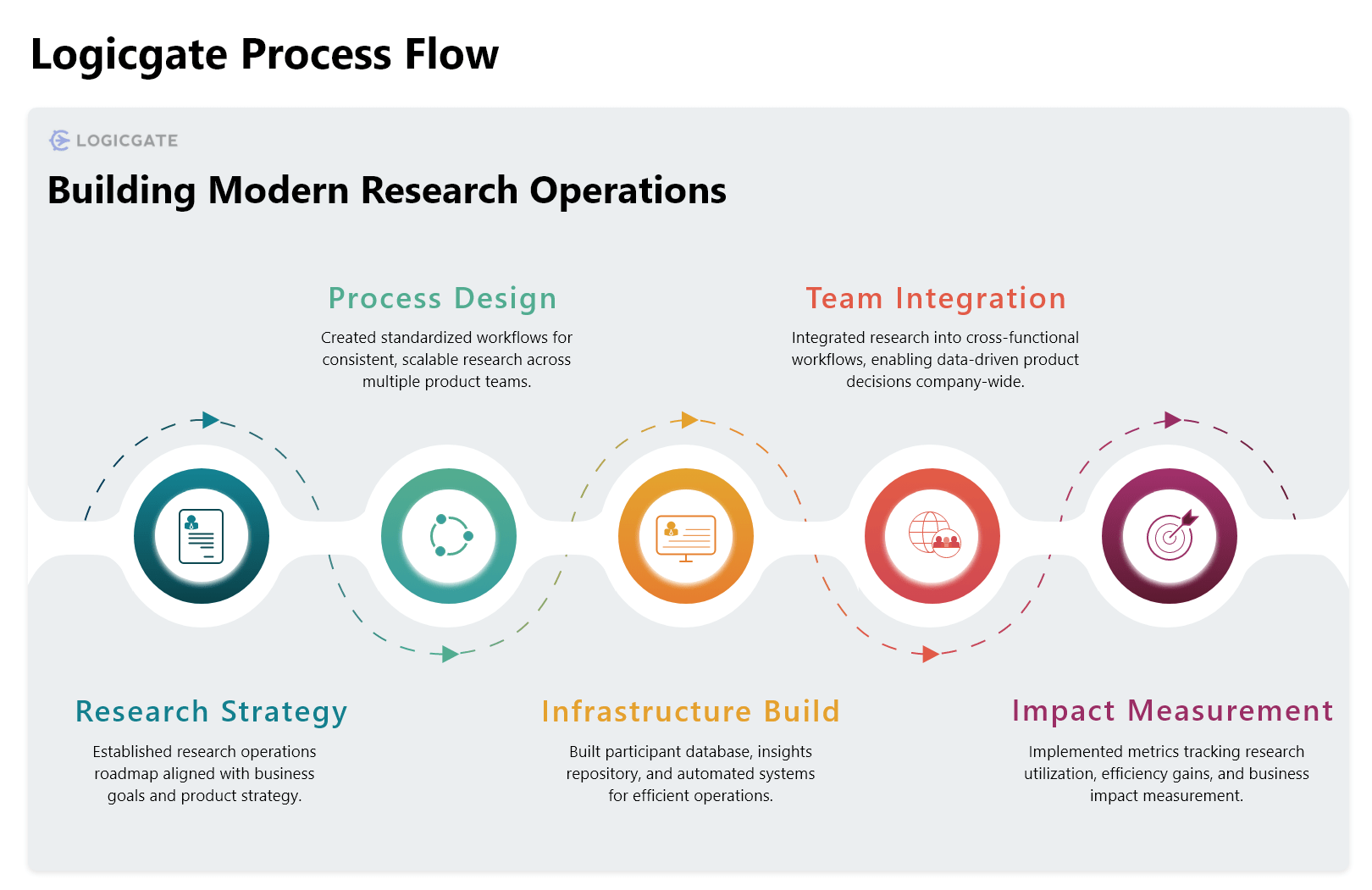
Established end-to-end research workflows, reducing turnaround time by 60%.
Creating an Accessible and Searchable Insights Repository
Built a centralized knowledge base, doubling research utilization.
Establishing a Participant Database & Consistent Recruitment
Developed a 1,000+ participant database, reducing recruitment time from weeks to days.
Research Operations & Scalability
Building a research function from scratch required creating foundational systems that would support data-driven decision making at enterprise scale.
I focused on three critical pillars: streamlined processes for concurrent studies, centralized knowledge management, and automated recruitment systems for Fortune 500 decision-makers. These investments transformed LogicGate into an organization where research consistently informed every major product decision.
Building Scalable Research Processes
I established standardized testing protocols, automated survey systems, and cross-functional research request processes that could scale with rapid team growth. This reduced research turnaround time, enabling consistent insights delivery across multiple product teams and agile squads.
Creating Searchable Insights Repository
Research findings were scattered across emails and slide decks, making it impossible to access previous insights or identify patterns. I categorized findings by user type, feature area, and research method, making insights instantly accessible to cross-functional teams.
Establishing Participant Database & Recruitment
Recruiting enterprise users took weeks through manual customer success outreach, creating bottlenecks that delayed product decisions. I segmented participants by company size, role, and usage patterns, then built a streamlined request flow with system checks to balance outreach across the candidate pool.
From Systems to Solutions
With research operations and systems established, I shifted focus to applying these capabilities directly to product challenges. Working closely with the design team, I used our new research infrastructure to conduct deep user studies that would guide major product improvements, starting with the critical challenge of user onboarding and platform adoption.
Understanding the GRC Learning Curve
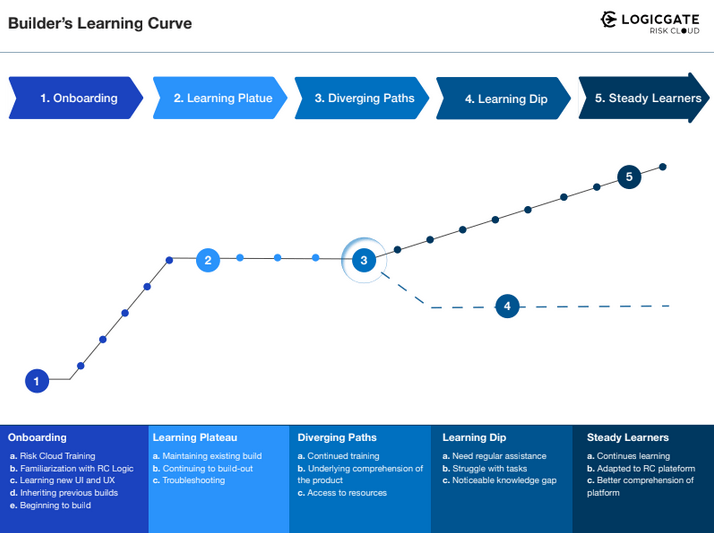
Complex GRC software created a binary user experience, where people either became power users or got frustrated and saw performance dips. I mapped the user journey to identify critical friction points in the learning curve that determined long-term platform adoption and success.
Self-Guided Milestone-Driven Onboarding
We built a comprehensive learning portal with step-by-step guidance that walks new users through platform capabilities. The milestone-driven approach builds expertise progressively, transforming the intimidating GRC software into an approachable, confidence-building experience that increases user stickiness.
User Research Context + Goals
LogicGate's complex GRC software created user confusion around record completion and field guidance. Users struggled with lengthy text-heavy instructions and needed clearer, more intuitive ways to understand form requirements. I designed A/B tests to evaluate different approaches to record guidance, focusing on visual clarity, information hierarchy, and user comprehension to improve the overall form completion experience.
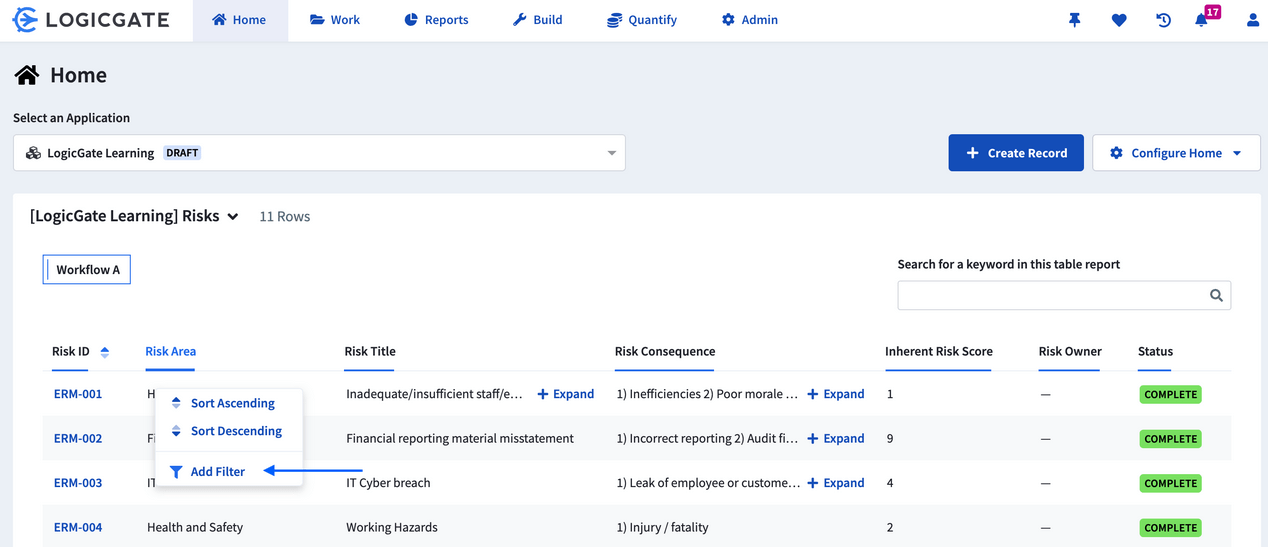
A/B Test - Visual Guidance Approach
Test Focus: Table format vs. color-coded guidance for risk assessment fields
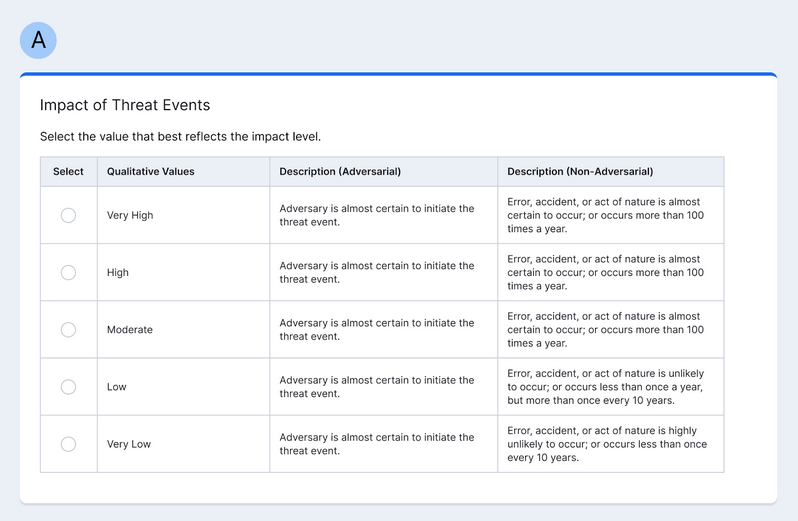
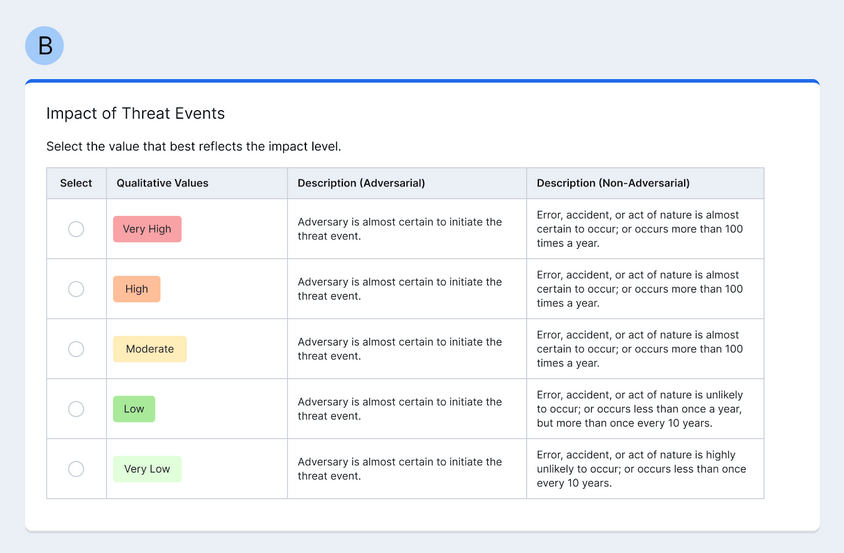
Results: 87% preferred Design B with color indicators
- Design A Cons: "Too much description" and "table format takes up a lot of space"
- Design B Pros: "Qualitative values instantly jump out at you and the coloring scheme lets you know what is critical and what isn't"
- Key Insight: Color coding provided immediate visual hierarchy that users found essential for quick decision-making
A/B Test - Information Layout
Test Focus: Split-screen guidance vs. inline contextual help
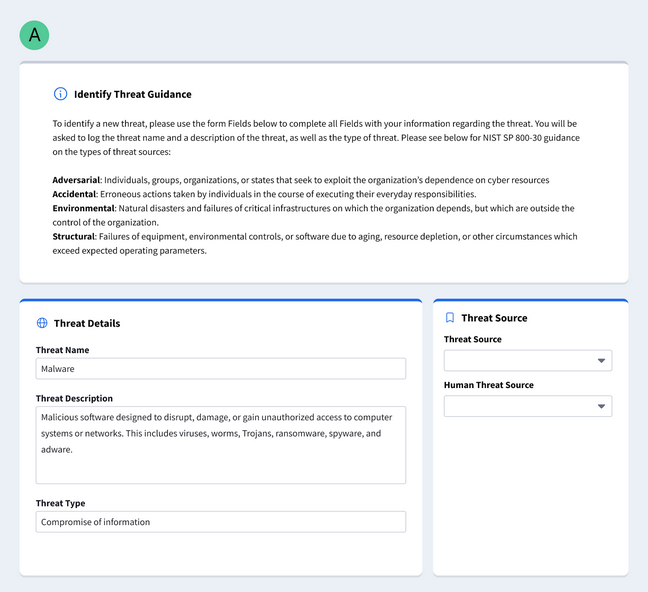
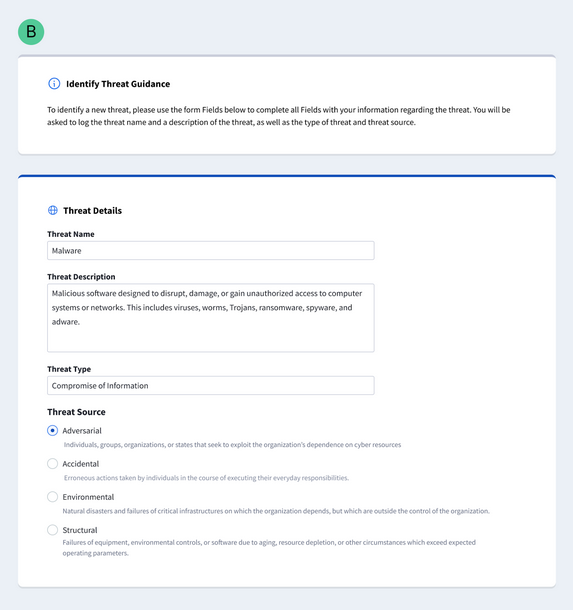
Results: 64% preferred Design B with inline guidance
- Design A Cons: "Too much data, have to go back and forth" and "harder for inexperienced users"
- Design B Pros: "Design B is so much easier to read and navigate" and "information is where I would expect to find it"
- Key Insight: Users preferred contextual guidance that appeared directly with relevant fields rather than the separate (and longer) reference sections
Modernizing Executive Dashboards
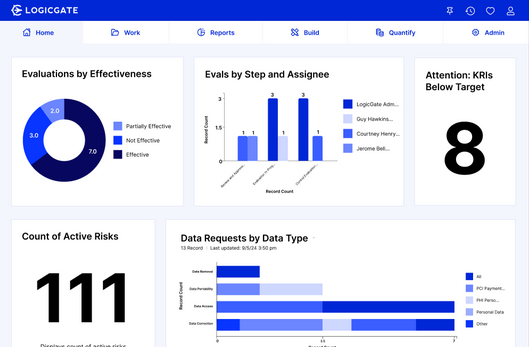
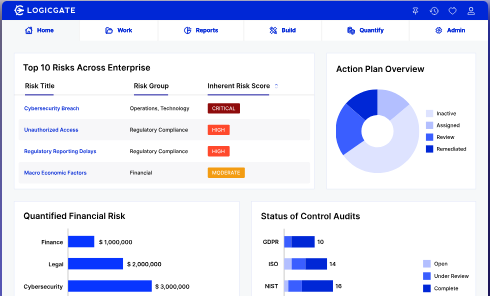
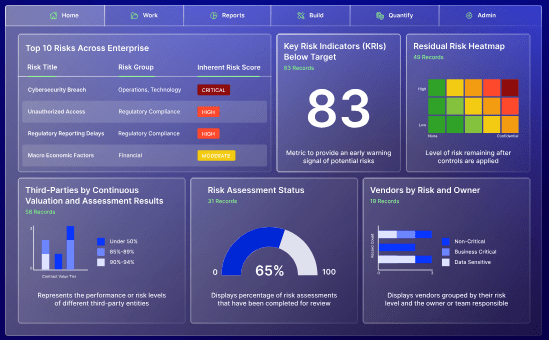
Enterprise clients consistently requested dashboards that could seamlessly transition from detailed risk analysis to executive boardroom presentations
Through moderated usability testing and user interviews, I discovered a critical gap: our basic blue and black interface lacked the visual sophistication and data hierarchy needed for executive consumption, but was also too homogenized for quick analytical insights.
I led a comprehensive redesign process, iterating from the original monochrome interface through color-coded prototypes to arrive at a modern dashboard that strategically uses color to convey risk severity and employs clean data visualization principles. The final design enabled risk analysts to quickly parse complex data patterns while providing executives with presentation-ready insights that required no additional formatting or explanation.
Reflection & Impact
Building LogicGate's research operations from the ground up taught me that infrastructure enables impact. By building scalable systems and conducting hundreds of hours of user research (from A/B testing interface designs to deep enterprise workflow studies), I proved that robust research operations help uncover better insights and make them actionable across the entire organization.
- Built research infrastructure, standardized workflows, and established systematic research processes
- Built a 1,000+ user testng database and streamlined recruitment systems and particpant rotation
- Created a searchable insights repository that transformed desing+build via company-wide research access
"Research infrastructure isn't overhead - it's what transforms user insights into scalable business impact."
Key Project Reflection