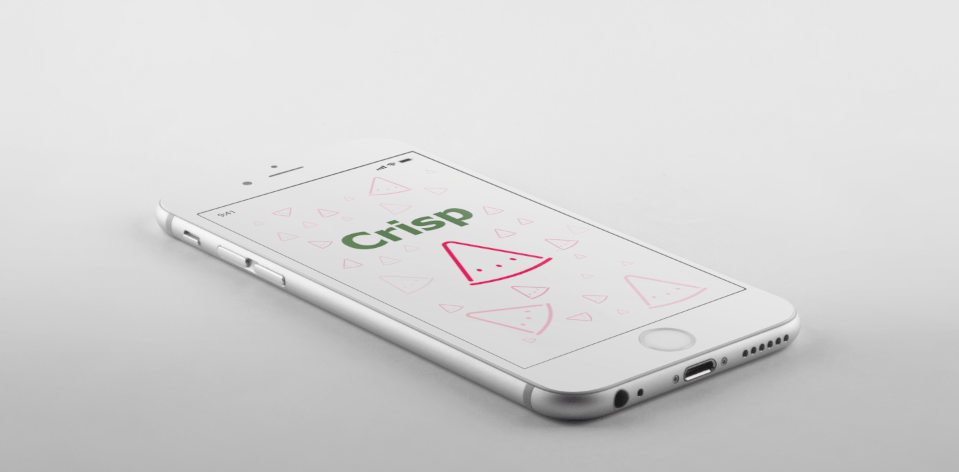
Designing Sustainable Food Discovery
Crisp was an 10-week end-to-end design challenge to create a local food discovery app that helps users find fresh, sustainable, and locally sourced food options, cuting through the noise by focusing specifically on healthy alternatives that align with users' values and dietary preferences.
Key Challenges
Problem: Health-conscious and environmentally aware consumers struggle to discover local food options that meet their criteria for freshness, sustainability, and community support. Other platforms bury these options among mass-market chains and don't provide the specific filtering and information needed to make informed choices about local, sustainable dining.
So what was happening?
- Information overload from generic food apps showing every possible restaurant
- Lack of sustainability indicators to identify sustainable options
- Missing context about sourcing, farming practices, and community impact
- Poor discovery of small businesses that don't have strong online presence, like markets, artisan growers, and farm stands
Design Opportunity
How might we create a focused discovery experience that connects conscious consumers with local, sustainable food options while supporting small businesses and community food systems?
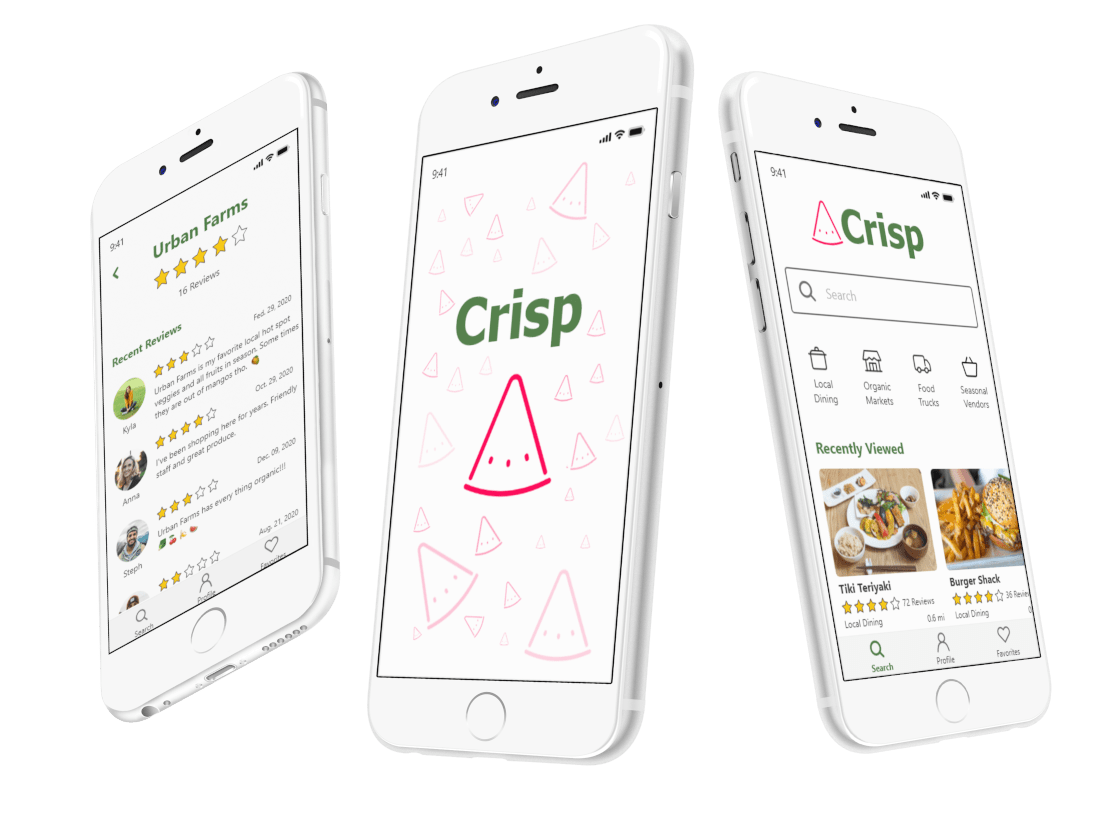
The Process
The Problem
With food trucks, farmers markets, and pop-ups constantly shifting locations, conscious eaters lack reliable tools to discover fresh, local
food options. Existing discovery platforms fail to address the dynamic nature of local food ecosystems, creating friction between
values-driven consumers and the small businesses they want to support.
My Role
I led end-to-end product design and research for Crisp, including user research, competitive analysis, information architecture, interaction
design, and visual identity development. My work spanned from initial user interviews and journey mapping through final prototypes and
design system creation.
Research & Competitive Analysis
I conducted in-depth research on how people discover local food, exploring consumer behavior, access to resources, and the tools they use,
like search engines, reviews, and recommendations. I also analyzed top B2C food apps, industry trends, market leaders, and the evolution
of the food app space. This included a full heuristic analysis to identify gaps and opportunities in sustainability filtering, real-time
location tracking, and small business discoverability.
Surveys and Interviews
User Screening & Recruitment
I created and distributed a screener survey to identify target users: urban dwellers who dine out 2-3 times a week and rely on digital
recommendations to discover new spots. Shared via LinkedIn and Facebook, the survey helped filter qualified participants for follow-up
interviews. for clinical trials.
User Interviews
I conducted structured interviews with 5 participants (3 male, 2 female) via Zoom, each lasting 20-30 minutes. The sessions focused on
understanding target market meal time routines, dining habits, food discovery processes, and how participants connect with their favorite
food brands. These interviews provided critical insights into user motivations, pain points, and decision-making criteria when
discovering new local food options.
Affinity Mapping
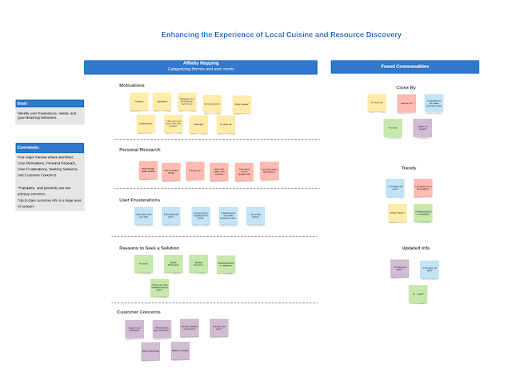
Using brainstorming and affinity mapping, I surfaced key patterns from user interviews, highlighting motivations, personal research habits, frustrations, and concerns. This synthesis process helped identify core user needs and shaped early design direction by revealing critical themes around trust, convenience, and values alignment in food discovery behaviors.
Empathy Maps
Target Market
Target users included health-conscious eaters, foodies, and locavores: tech-savvy, socially aware professionals who dine out 3-5 times
a week and prioritize fresh, local food.
Empathy Mapping
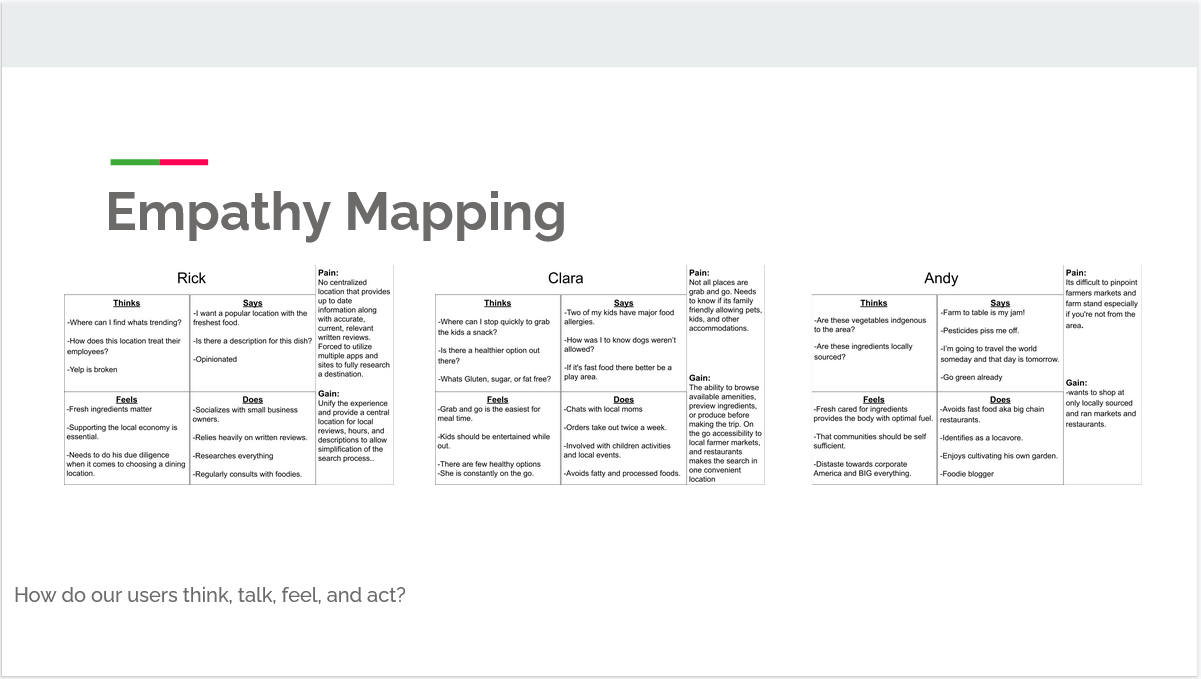
I created empathy maps to examine how the ideal user thinks, feels, and behaves, providing a window into their mindset to guide design
decisions. These maps revealed key emotional drivers around sustainability values, social discovery preferences, and the anxiety users
feel when trying to balance convenience with their ethical food choices.
Creating Personas
After creating empathy maps, I analyzed user pain points, needs, and motivations to develop detailed personas that clarified who the Crisp user is and what matters most to them. These personas synthesized research findings into actionable user archetypes, providing clear direction for feature prioritization and design decisions throughout the product development process.
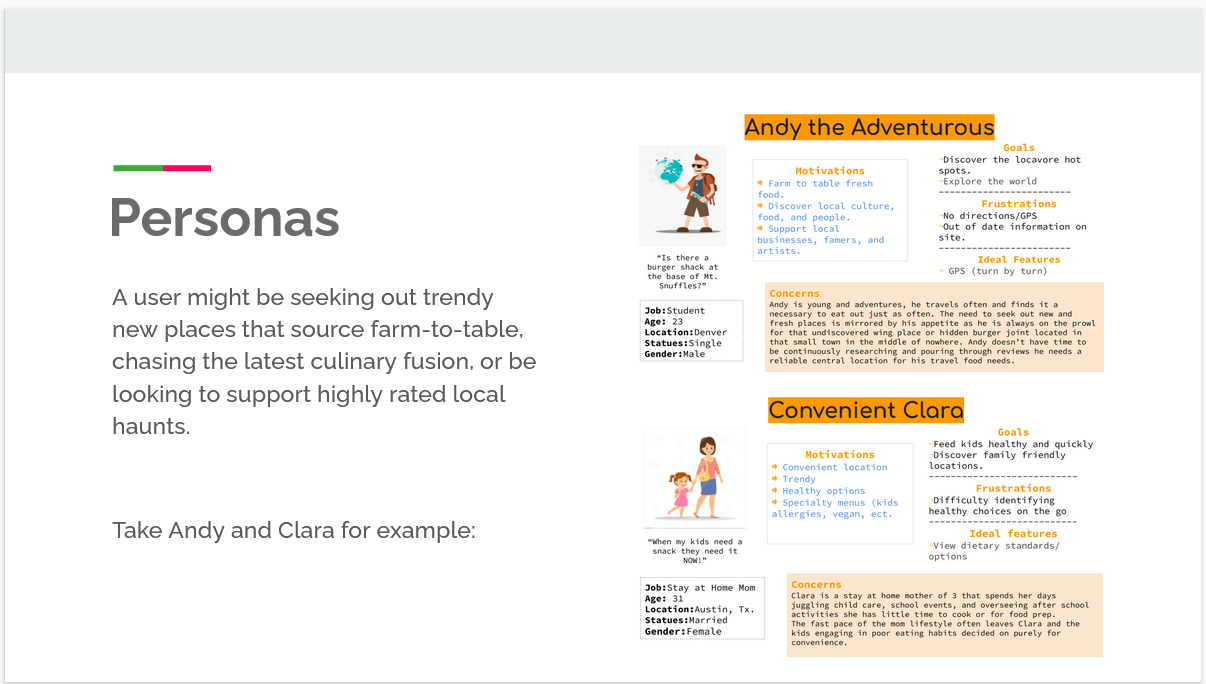
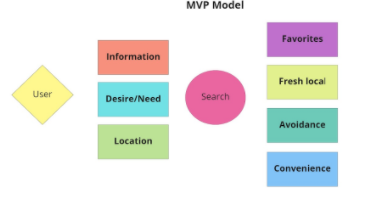
While identifying user stories, I determined that hungry people had three primary motivations: a need for information, satisfying a craving or desire, and convenience (finding something location specific either in the moment or when planning ahead). These core motivations shaped the fundamental user flows and feature prioritization for the Crisp experience.
Brand Platform & Design System
Brand Strategy
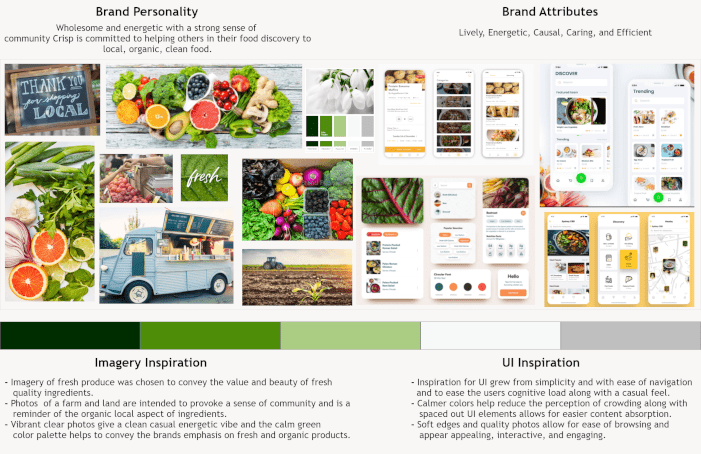
I developed Crisp's brand platform around the concept of freshness: "Crisp" evokes fresh produce and positions the app as the go-to
guide for local food discovery. The mission focuses on connecting consumers with locally cultivated agricultural resources through
timely information. Brand personality attributes of lively, energetic, casual, caring, and efficient guided all design decisions.
Design System
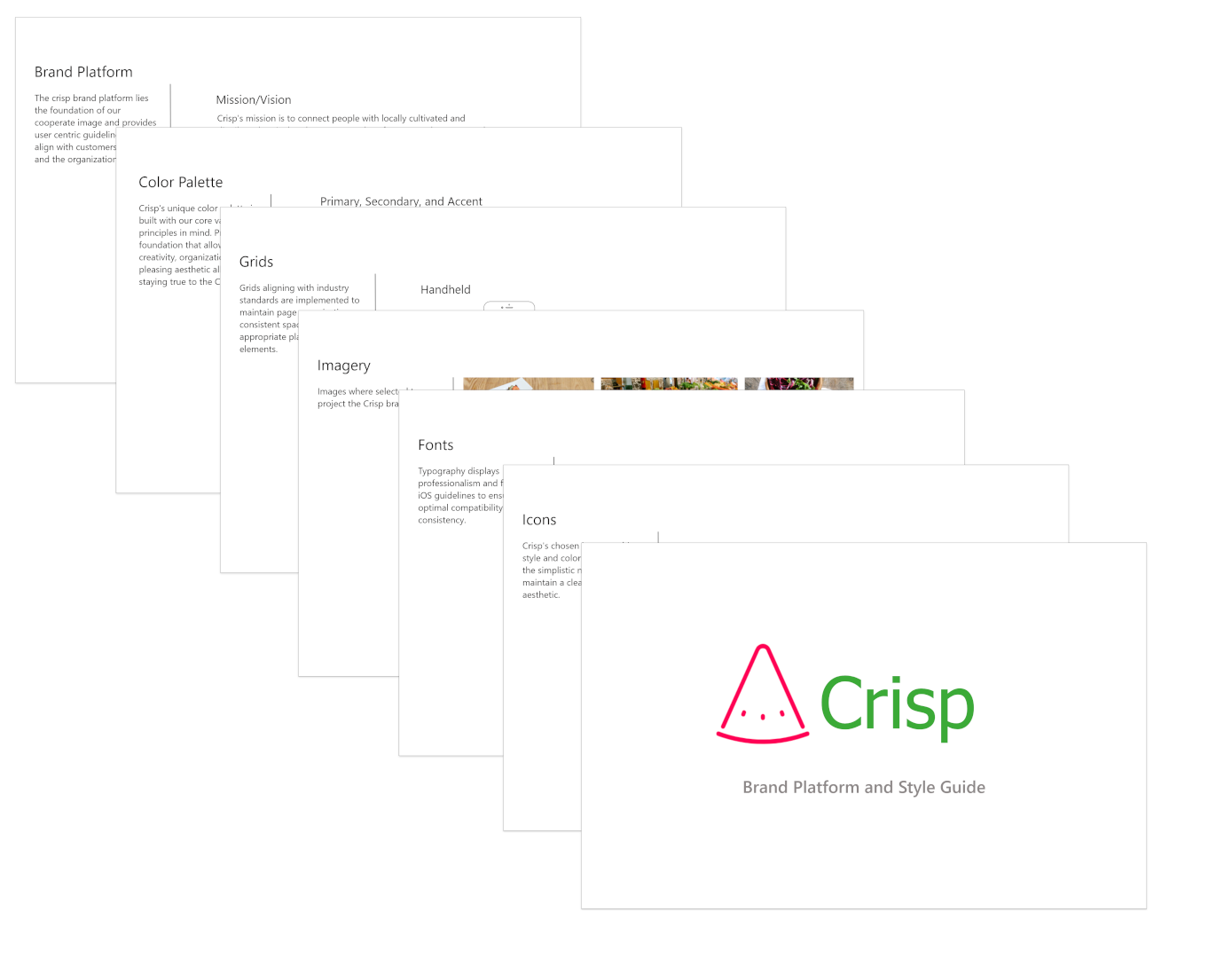
I created a comprehensive style guide establishing design standards for logo usage, UI components, grid systems, iconography, typography,
and color palette. This system ensured consistency throughout the project while supporting scalable product development across all
touchpoints.
Mood Board
I crafted a mood-board to provide visual inspiration and direction, exploring the Crisp brand personality through imagery and design elements that reflected the lively, energetic, casual, and efficient nature of the local food discovery experience. This visual foundation established the aesthetic direction for all subsequent design work.
Site Map
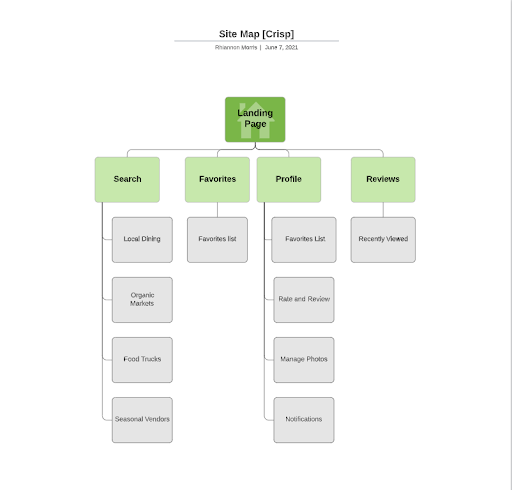
I constructed a sitemap to demonstrate the information architecture and core navigation structure. The sitemap provided a blueprint of essential categories including profile management, favorites, reviews, and search functionality, establishing the foundational framework for user flows and feature organization throughout the app.
User Flows
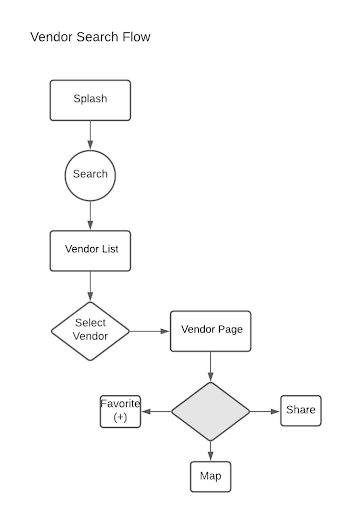
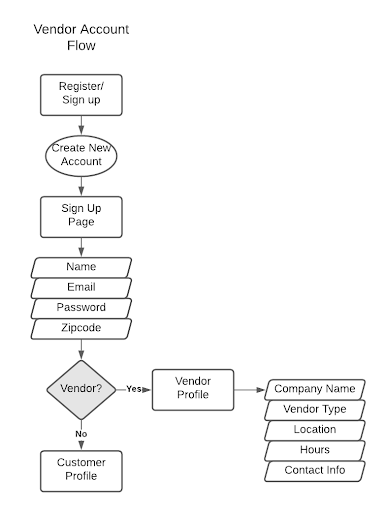
Following heuristic analysis focused on usability and efficiency, I structured information architectures and user flows to optimize the discovery experience. The user flows provided a blueprint of critical user journeys, mapping the steps and decision points needed for goal acquisition, from initial food search through restaurant selection and booking confirmation.
Early Ideation & Prototyping
I sketched all necessary screens for the identified user flows, then uploaded them to Prototype On Paper (POP by Marvel) to create a clickable prototype. This rapid prototyping approach allowed me to quickly validate core interactions and information hierarchy before investing in higher-fidelity designs.
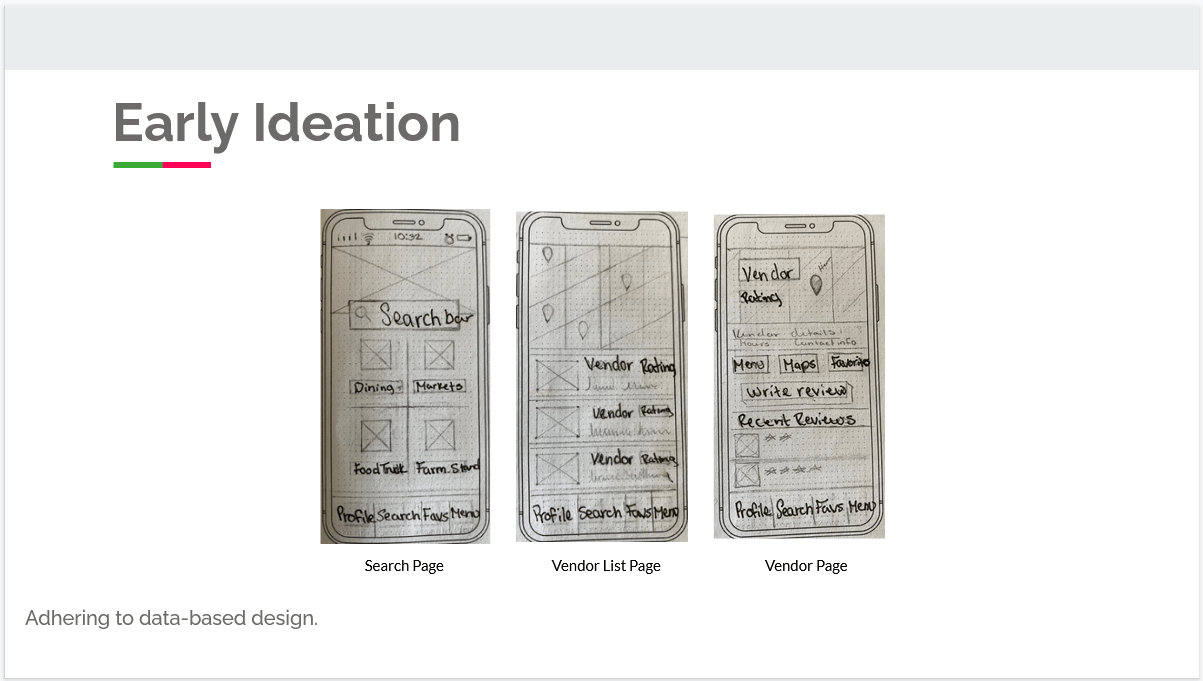
With the functional prototype in hand, I recruited participants and conducted guerrilla usability testing with five local users to identify usability issues and gather feedback on the core user experience before moving to detailed design phases.
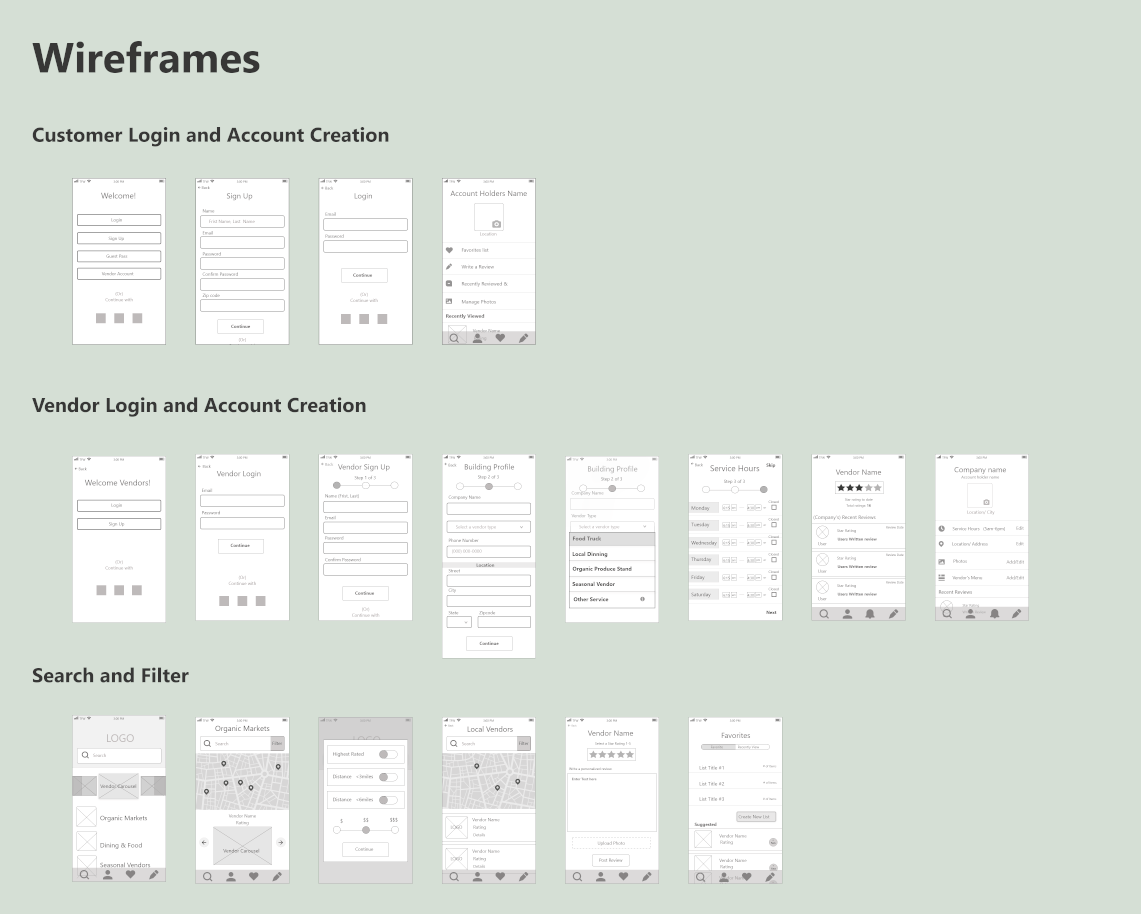
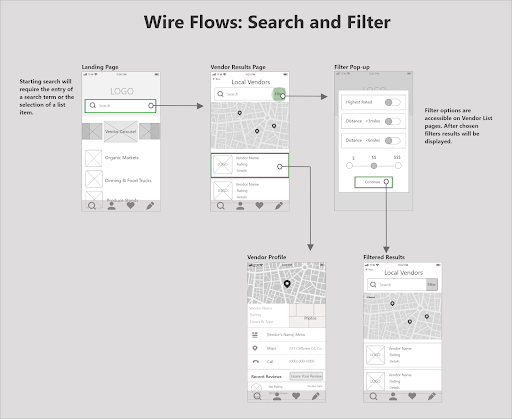
Wire Frames and Wire Flows
Usability testing demonstrated that users understood the foundational design and application concept, while revealing specific improvements needed for core interactions. I incorporated these insights into wireframe development, refining the user flows to address identified pain points and optimize the discovery experience.
Accessibility Audit
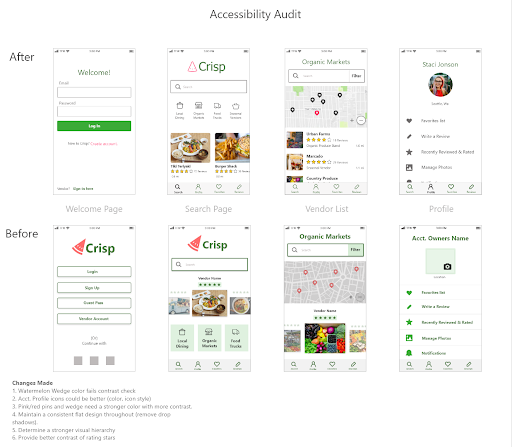
I conducted a comprehensive accessibility audit to assess the compatibility of color palettes, typography, and interface elements within the high-fidelity designs. The audit evaluated text contrast ratios, font sizes, and background combinations to ensure readability and usability across diverse operating systems and devices, meeting WCAG guidelines for inclusive design.
High Fidelity V1
Visual Design
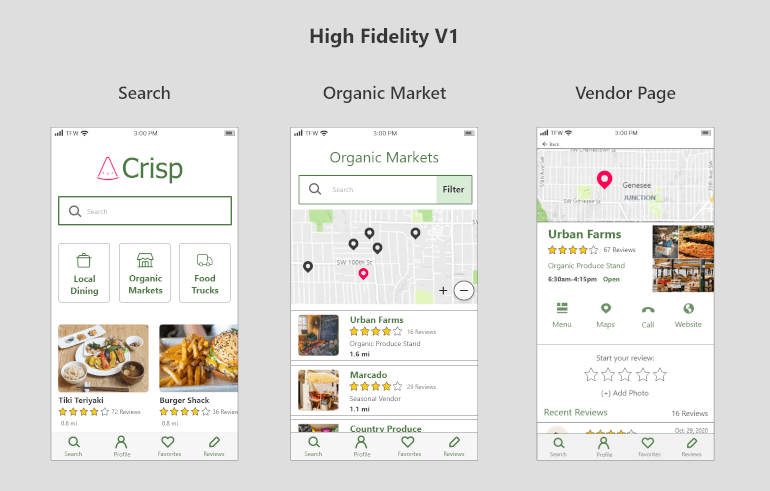
After wireframe validation through user testing, I incorporated feedback and implemented visual improvements into the final designs.
This phase involved adding brand colors, detailed interface elements, and personality-driven design components that aligned with
Crisp's lively, energetic brand attributes.
Interactive Prototyping
With high-fidelity screens complete, I developed a fully functional digital prototype focusing on realistic user interactions and
micro-animations. I consolidated the information architecture using sitemaps and user flows, then mapped interactive elements to
corresponding screens to create a seamless, testable experience that demonstrated the complete user journey.
Moderated Usability Testing
Planning
I drafted a comprehensive usability test plan outlining goals and objectives focused on identifying user patterns related to UI
organization, specifically examining the category button interactions on the search page (seasonal vendor, food truck, organic markets,
and local dining). The test plan detailed methodologies, participant criteria, recruiting strategy, and testing schedule.
Results
Usability testing revealed major, minor, and general issues throughout the Crisp design and prototype. I categorized findings by
priority and urgency, creating an actionable roadmap for design iterations. The systematic analysis provided clear direction for
addressing usability barriers and optimizing the user experience before final implementation.
Edge Cases
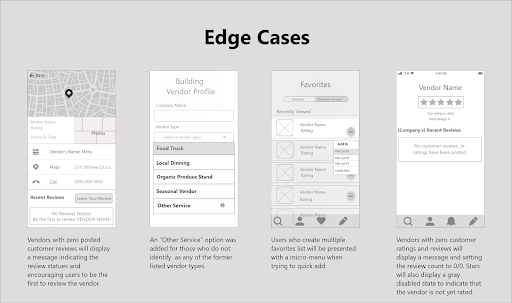
I also identified and designed for critical edge cases including empty search results, location services disabled, poor connectivity,
and seasonal business closures, ensuring smooth user experiences when encountering unexpected situations or system limitations.
High Fidelity V2
Following usability test results, I conducted an iterative design session implementing numerous improvements based on user feedback. Key changes included integrating contextual feedback alerts after multi-step processes, simplifying screen layouts to reduce cognitive load, streamlining the review submission process, and adding visual emphasis to critical interactive elements. These iterations directly addressed the major usability issues identified in testing, creating a more intuitive and efficient user experience.
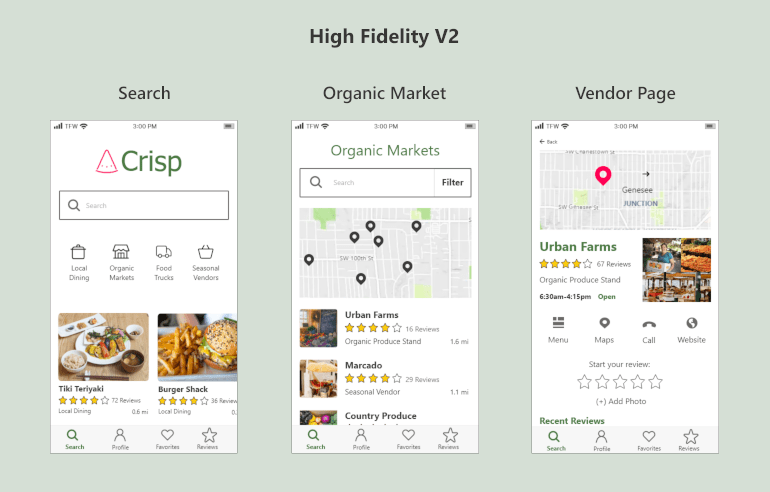
After implementing these design changes from initial feedback, I conducted a second round of usability testing with five new participants recruited from social media groups. Using the same methodology as round one, participants worked through updated task flows to validate whether the iterative improvements successfully addressed previous usability issues and enhanced the overall user experience.
Reflection & Impact
Through comprehensive user research and iterative prototyping, I successfully validated the need for a focused local food discovery solution that prioritizes sustainability and community values. The testing process demonstrated strong user engagement with the concept while revealing critical usability improvements that enhanced the overall experience.
- User research validated a market need for sustainable food discovery
- Multiple testing rounds significantly improved usability and interactions
- Sustainability positioning differentiated Crisp from generic food apps
- Early accessibility planning prevented user exclusion across diverse groups
"Focused user research and careful brand positioning can drive differentiation in crowded markets."
Key Project Reflection